Mud and paraffin applications are the supporting part of a naftalan course. They do not stand in for a bath; the point is to hold heat in the tissue for longer and to carry the effect through the gaps between procedures.
Paraffin therapy. Melted paraffin is laid over a joint or muscle in thin layers and covered. Because paraffin gives its heat up slowly, the area stays warm for a long stretch, which helps muscle tension ease and a joint move more freely. It is used most often on hands, feet, shoulders and the lower back, and during rehabilitation after an injury.
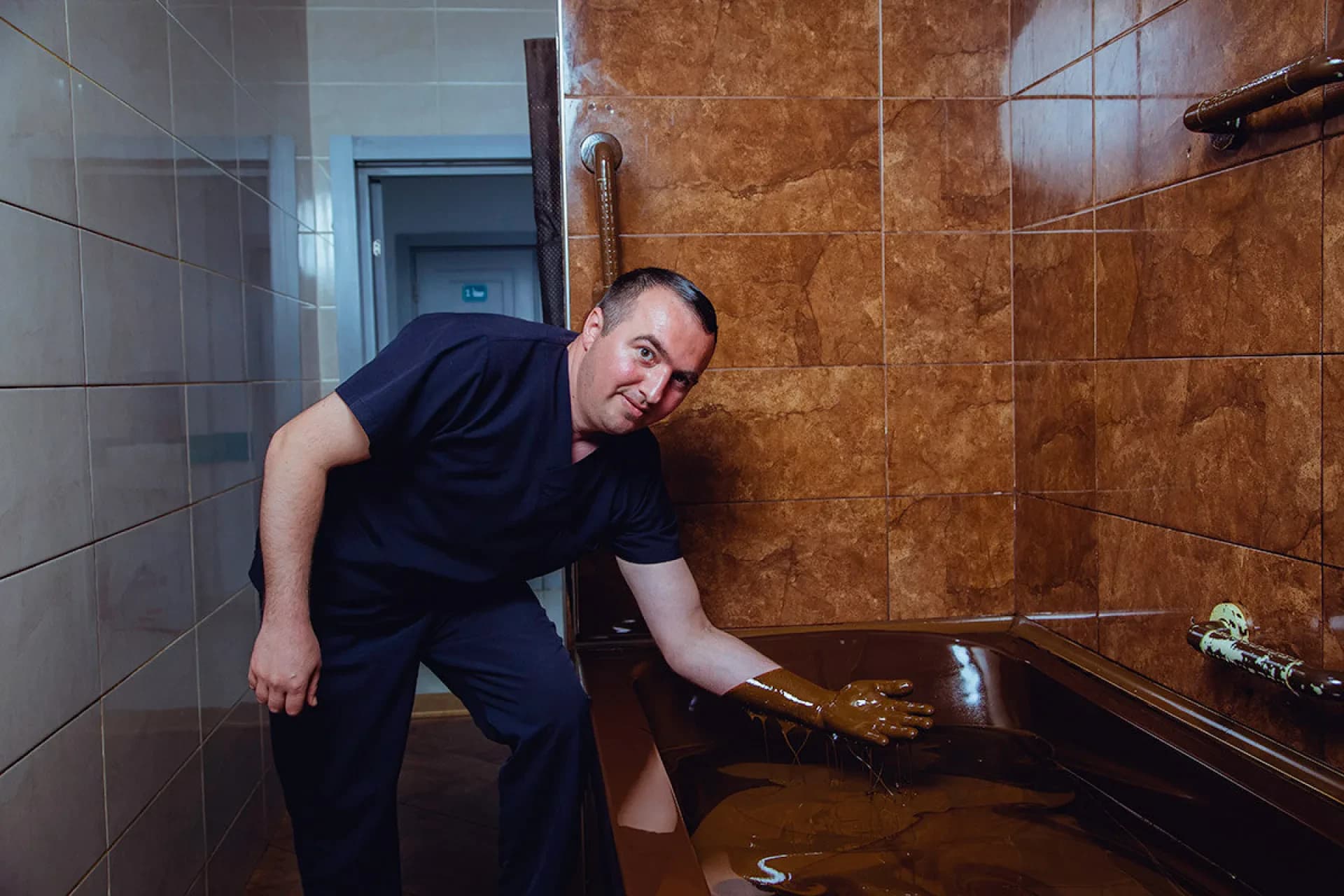
Mud applications. Therapeutic mud is warmed and applied locally to particular areas. The procedure is used for joint and spinal complaints, and within skin-care programmes. Mud can be applied generally or to a single area — your physician decides which.
Both procedures are given on prescription and under the supervision of medical staff. Temperature, layer thickness and session length are set from your own results; in certain blood-pressure and cardiovascular conditions heat procedures may be limited or not prescribed at all, and that becomes clear from the examination and blood work on arrival.
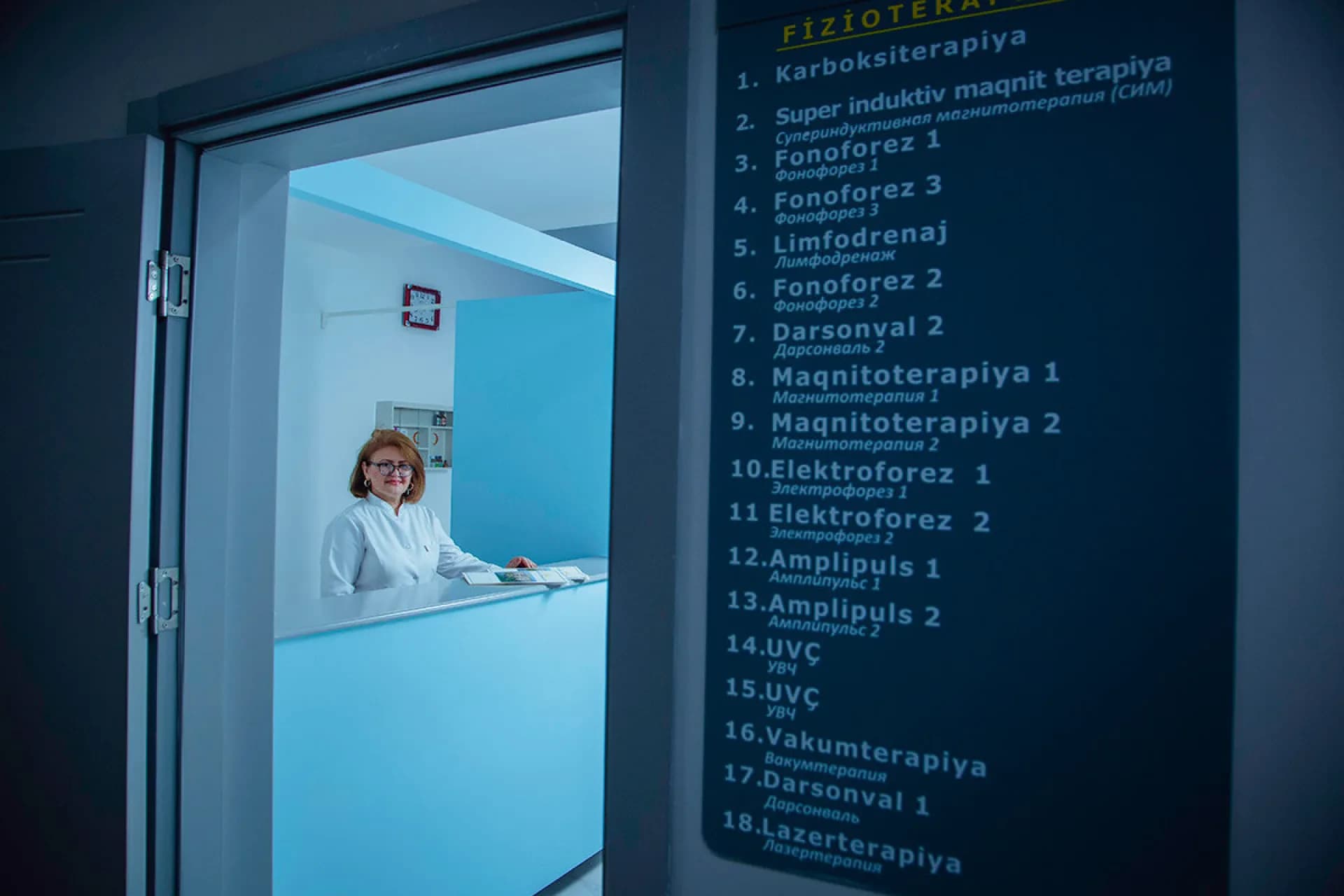
When a course is planned, mud and paraffin are not put on the same day as a naftalan bath; they are usually scheduled on non-bath days, alongside physiotherapy. A shower and twenty to thirty minutes of rest follow each session.