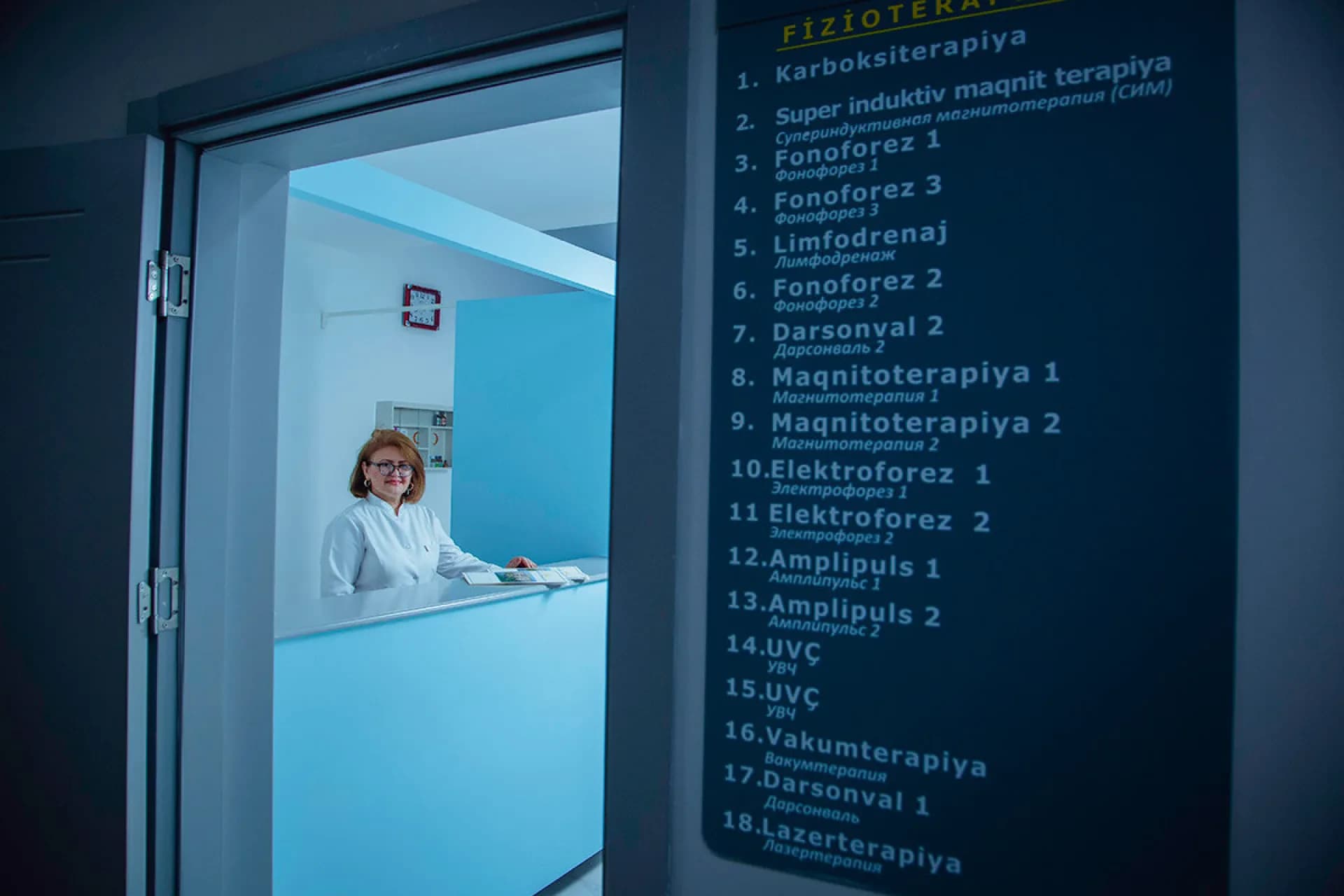
The physiotherapy wing of our treatment building offers eighteen types of procedure, and none of them is booked on its own: each is added as part of a programme a physician has drawn up. The aim is to reduce pain, restore muscle and nerve function, and bring back range of movement.
The principal methods available here:
- Super-inductive magnetic therapy (SIS) — a high-intensity electromagnetic field reaching deep into tissue; used for osteochondrosis, arthrosis, muscle spasm and rehabilitation after injury
- Magnetotherapy, electrophoresis, phonophoresis, amplipulse, darsonval, UHF — established apparatus methods directed at pain and inflammation
- Laser therapy — for skin conditions, neuritis, osteochondrosis and joint problems
- Carboxytherapy and vacuum therapy — rheumatological conditions, intervertebral hernia, circulation problems
- Lymphatic drainage — to improve lymph flow and reduce swelling and oedema
- Shockwave therapy — gout, Achilles tendon pain, shoulder periarthropathy
- Traction — to take load off the spine
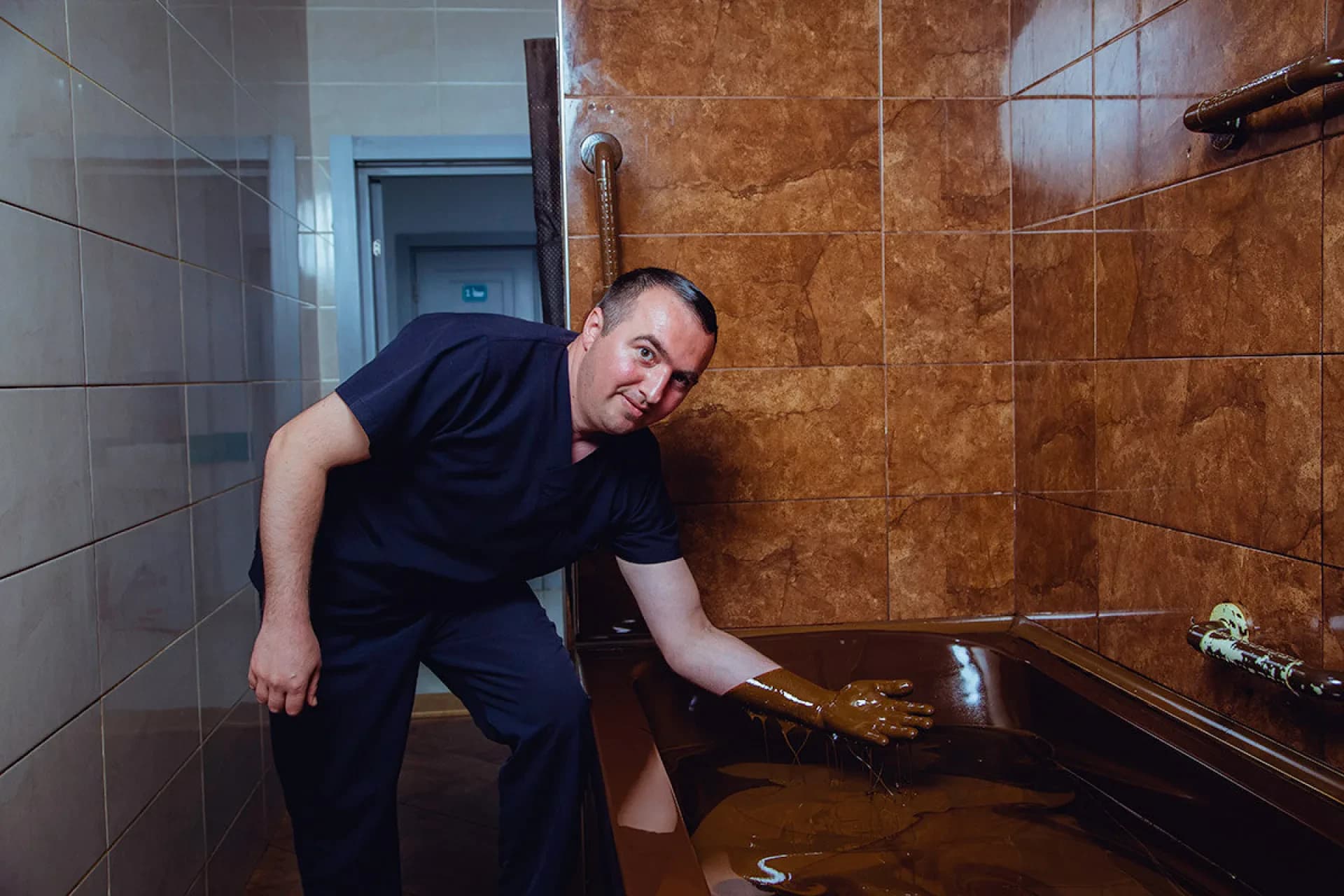
Acupuncture, hijama, ozone therapy and bio-massage can also be written into a programme. Several procedures are given together with naftalan — infrared application and Naftovit, the natural naftalan oil, among them.
Which method suits you is decided after the examination and blood work on arrival. The procedures are non-invasive and comfortably tolerated; medical staff attend every session, and your results are re-checked as the course progresses.
Procedures in this service
Super-inductive therapy is a modern physiotherapy method worked through a high-intensity electromagnetic field. It reaches deep into tissue, helping to reduce pain, restore muscle and nerve function, and improve movement.
It is non-invasive and comfortably tolerated — no needles, no incision, no recovery period. It is normally prescribed not on its own but alongside naftalan baths and other physiotherapy sessions, as part of a course a physician has drawn up.
Indications
- Osteochondrosis and spinal conditions
- Arthritis, arthrosis and other joint problems
- Muscle spasm and pain syndromes
- Neuralgia and peripheral nerve conditions
- Rehabilitation after injury or surgery
- Muscle and tendon injuries
Shockwaves are acoustic waves able to carry energy into the painful points of the musculoskeletal system. They stimulate cells and prompt the release of growth factors, which supports tissue regeneration.
The therapy stimulates reparative processes in tendon and bone, helps clear calcifications, eases chronic pain and relaxes overloaded muscle. It is used mainly in orthopaedics and rehabilitation.
Indications
- Gout
- Osteochondrosis, osteoarthrosis
- Muscle tonic syndrome
- Achillodynia (Achilles tendon pain)
- Shoulder periarthropathy
Traction is among the most workable ways of acting on the spine in compression syndrome. It is directed at easing muscle spasm, lowering intradiscal pressure and reducing protrusions and hernias.
Spinal traction reduces muscle contracture, decompresses a pinched nerve and lowers the internal pressure of the intervertebral disc. To strengthen the effect, a massage or a muscle-relaxing physiotherapy session is given beforehand. The method is used in neurosurgery, traumatology and neurological rehabilitation.
Indications
- Intervertebral disc hernias and protrusions
- Spinal curvature
- Pain syndromes involving nerve compression
- Degenerative spinal conditions
- Rehabilitation after injury or fracture
Lymphatic drainage is a physiotherapy massage or pressotherapy that speeds the flow of lymph and helps clear excess fluid and toxins. It reduces oedema, improves circulation and activates the metabolism.
Sessions are given as a course, and usually not on the same day as a naftalan bath. It is often written into programmes for guests arriving with heaviness in the legs, swelling after a long flight, or venous problems.
Indications
- Swelling and oedema
- Tired, heavy legs
- Chronic venous insufficiency
- Cellulite and loss of skin elasticity
- Physical strain and fatigue
- Constipation and sluggish bowel function
Carboxytherapy applies carbon dioxide (CO₂) under or onto the skin for medical and cosmetic purposes. The body reads the area as short of oxygen and responds by speeding circulation, sending more oxygen into the tissue.
The gas is delivered directly into the subcutaneous layer through a medical device and a fine needle. The procedure is used for rheumatological complaints, intervertebral hernia and circulation problems, and within cosmetic programmes.
Indications
- Rheumatological conditions, arthrosis
- Intervertebral hernia, osteochondrosis
- Impaired spinal cord function
- Vestibular disorders
- Poor circulation
- Cosmetic renewal programmes
The phyto-barrel is a small individual sauna made of long-lived cedar, into which the steam of medicinal herbs is fed. The head stays outside during the session, which prevents the cranial vessels overheating and avoids difficulty breathing.
A session is gentler than a classic sauna, so it can suit guests who tolerate heat treatments poorly. Even so, restrictions apply in certain cardiovascular and respiratory conditions — settled at the examination on arrival.
Indications
- Relief in arthrosis, arthritis, osteochondrosis and radiculitis
- Muscle tension and chronic fatigue
- Sluggish metabolism
- Clearing the pores and general detox